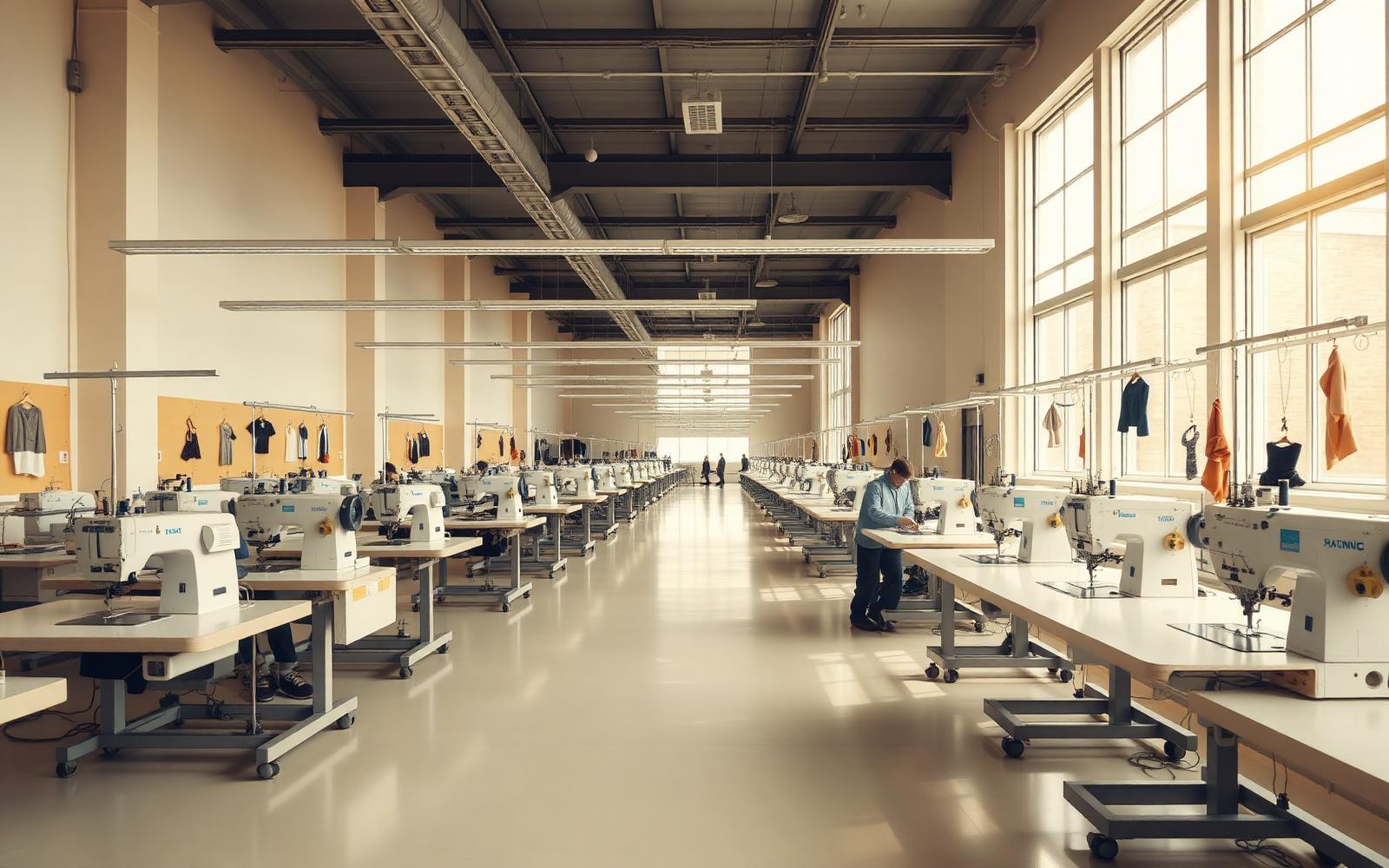
Every conversation with a new founder eventually reaches the same question: 'Should we do Private Label, OEM or ODM?' The three sound similar and are often mixed up, but they describe fundamentally different relationships with your manufacturer — different levels of control, different capital requirements, different speeds to market, and different long-term brand implications. Here's the practical breakdown, from a manufacturer that runs all three programs.
The three models in one paragraph each
Private Label (White Label)
The factory has an existing product. You attach your brand — your labels, hangtags, packaging — and sell it. You do not own the design; another brand could source the same base product from the same factory. Fastest to market, lowest investment, lowest differentiation.
OEM — Original Equipment Manufacturer
You bring the design (sketch, tech pack, reference sample). The factory manufactures it exactly to your specification. You own the design and the pattern. Higher investment, longer timeline, real product differentiation.
ODM — Original Design Manufacturer
The factory's design team creates a design for you — often starting from your mood board, target customer and price point. You get customised product without building an in-house design team. Middle-ground on investment, speed and differentiation.
Side-by-side: control, capital, speed
- Design control: Private Label = low · ODM = medium · OEM = high
- Capital required: Private Label = low · ODM = medium · OEM = high
- Time to first delivery: Private Label = 2–5 weeks · ODM = 6–12 weeks · OEM = 8–14 weeks
- Differentiation vs competitors: Private Label = low · ODM = medium–high · OEM = high
- Reorder flexibility: Private Label = fast · ODM = medium · OEM = medium
- Long-term brand equity: Private Label = limited · ODM = strong · OEM = strongest
When Private Label is the right choice
Private Label works best when you have distribution or audience but no product IP yet. A community influencer launching a first hijab drop to a warm audience. A boutique that needs to fill out a house line quickly. A brand testing a new category before committing to full OEM investment.
It's also the right entry point when working capital is tight. You can launch a credible line in weeks with 100–300 pieces per style, learn what sells, and reinvest the profit into OEM development for your hero products.
When OEM is the right choice
OEM is the model for founders building a defensible brand. If your design has a signature silhouette, a specific fabric spec, a proprietary construction detail — anything a competitor cannot easily replicate by walking into the same factory — you need OEM. It is more expensive and slower, but the product you launch is unambiguously yours.
This is also the model established brands use for their hero seasonal collections. Even brands that use ODM or Private Label for basics almost always run OEM for the pieces they market heavily.
When ODM is the pragmatic middle path
ODM is where most successful modest-wear founders spend the majority of their time. You don't need to hire a full-time designer, but you're not selling generic Private Label either. You brief the factory's design team with your positioning, price band and inspiration, and they come back with proposals you refine into your collection.
At Xair Clothify, ODM projects typically start with a 60-minute discovery call, an inspiration deck exchange, and a paid design retainer that unlocks 4–8 original design proposals per capsule. From there it's the standard sampling and bulk-production flow.
The hybrid model most established brands actually use
Almost every mature modest-wear brand ends up running a hybrid: OEM for their hero heritage pieces (the ones customers explicitly buy the brand for), ODM for seasonal capsules (fresh design without full in-house overhead), and Private Label for basics and extensions (fast, low-cost inventory to complete a look).
A good manufacturer supports all three under one roof, with one account team and one QC standard, so you don't fragment your supply chain as you scale.
How to decide in one honest conversation
- Do you have distribution / audience already? If yes and you want to launch fast → Private Label.
- Do you have a signature design or fabric that must not be replicable? → OEM.
- Do you have positioning and a customer, but no design team? → ODM.
- Are you launching a category test? → Private Label first, migrate to OEM once you know what sells.
- Are you scaling past 10K pcs / year across multiple SKUs? → Hybrid, orchestrated by one manufacturer.
Frequently asked questions
- What's the difference between OEM and Private Label in one sentence?
- In OEM you own the design and the pattern; in Private Label the factory owns them and you own only the branding on top.
- Is ODM more expensive than Private Label?
- Yes, usually 15–40% higher per unit at the same MOQ, because you're paying for original design work and pattern development. But your product is genuinely yours, which is worth the delta the moment your brand starts to matter.
- Can I switch from Private Label to OEM later?
- Yes, and most serious brands do. Start Private Label to validate the market, then move winning categories to OEM as reorder data proves them out.
- Does Xair Clothify support all three models?
- Yes — Private Label, OEM, ODM and White Label all run under one roof, with a shared account team, shared QC and shared logistics. Most of our long-term brand partners use a hybrid of two or three models across their line.
 How to Start a Modest Fashion Brand in 2026: The Complete Manufacturer's PlaybookFrom brand positioning to first bulk production run — a complete, honest playbook for founders launching a modest-wear label in 2026.
 Hijab Manufacturer Guide: How to Choose the Right Factory in 2026Choosing a hijab manufacturer is the highest-leverage decision a modest-wear founder makes. This guide walks through everything that matters.